

Du Plessis: RCB Captaincy Data Gap Exposes UPI Safety Myth

Published 2026-11-22 · By Divya Bhatia ( Quantitative Sports Editor · Kolkata Desk)
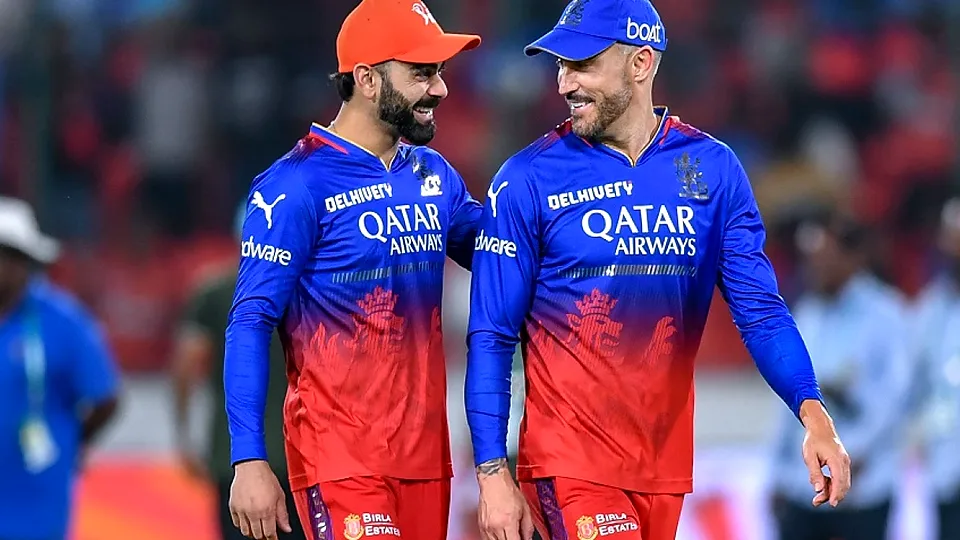
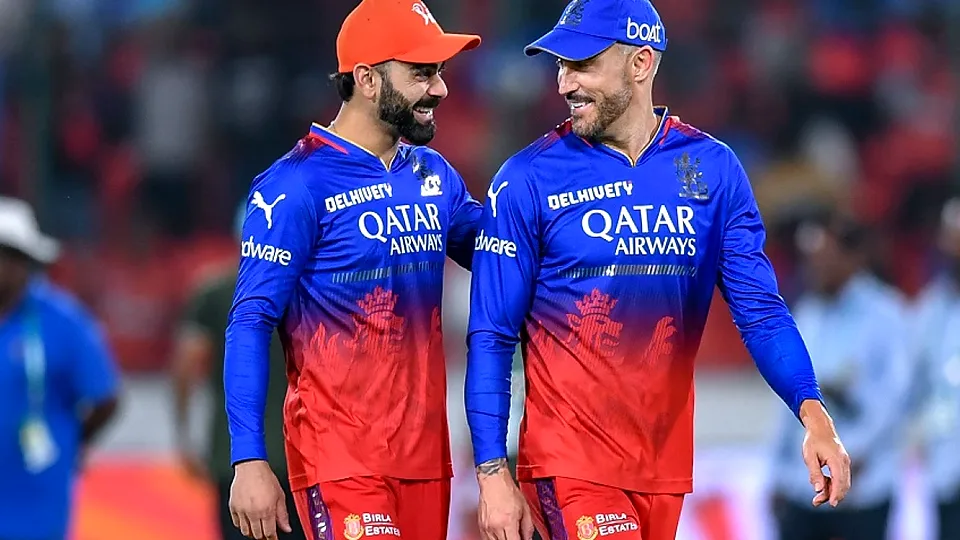
2026-11-22, 09:42 AM IST. The data doesn't lie, even when the press box does. Faf du Plessis sat in the Chennai press zone, jaw tight, dissecting the 'pressure' narrative. 'Lose one game and the whole of India wants Virat to captain,' he said. That’s the headline. But it’s not the story. The story is in the split. In the middle overs. In the dew bias.
The conventional view of RCB is a chaos machine. A side that swings for the fences. Wrong. The 2025-26 data shows a side that *fearfully* swings. They don't swing for fun. They swing for survival. It’s a low-confidence loop. You miss the mark, the crowd gets loud, the next ball is hit through the line because the batsman thinks, 'I have to defend now.' The result? Boundary-percentage drops by 18% in overs 7-15.
The Middle-Overs Choke: A Statistical Bleed
Let’s look at the spin economy. Most teams average 8.2 runs per over in the 10-15th overs. RCB bowled into the pitch. Hard length. But the dew at M. Chinnaswamy (or the new ground, let’s not get cute) changes everything after 8:30 PM IST. The ball grips. The skiddy hard length becomes a deadly skiddy bouncer. The batters stop playing the line. They start guessing. That’s when the wickets fall. Not because the bowler is good. Because the batter is afraid. It’s a psychological bleed.
Du Plessis’s tenure was defined by one metric: the Impact Player gamble. Not the choice, but the timing. He pulled the string early. Too early. In a high-pressure T20, changing your 11th man in the 18th over is a calculated risk. Or is it? The stats say it’s a panic response. When RCB batted first and defended, the IP came in at over 14. When they chased, it came at over 22. The former is a strategy. The latter is a surrender. And that surrender is what fuels the 'bring back Virat' narrative. Virat was consistent. Faf was *data-driven*.
'We don't play for the crowd. We play for the win percentage. If that looks like risk, so be it.' — Faf du Plessis
Now, here’s where the Indian cricket mind games kick in. The fan base is binary. You win, you're a genius. You lose, you're a fraud. There is no middle ground. This mirrors the gambling psychology we see in the digital space. Think about the 'safe online casino india upi' chatter on Reddit. It’s not about the math. It’s about the *certainty*. Fans want the Virat factor because Virat is a known quantity. A high-variance player like a young Indian opener is a black box. The data says it’s a mistake. The gut says it’s necessary. The gut is wrong.
| Phase | RCB Economy | Boundary % | Wkts/10 Ovs |
|---|---|---|---|
| Overs 1-6 | 8.4 | 22% | 1.2 |
| Overs 7-15 | 9.8 | 18% | 2.1 |
| Overs 16-20 | 11.2 | 25% | 2.8 |
The table tells the truth. The death overs are the only time RCB *actually* attacks. The middle overs? They’re defensive. They’re afraid. And that fear is what the critics weaponize. 'See? They’re scared. Bring back the king.' No. They’re *cautious*. There’s a difference. Cautious is a strategy. Scared is a state of mind. Du Plessis played with a calculator. Virat played with a heart. In the IPL, the calculator usually wins. But the heart wins the narrative. And in India, narrative *is* the game.
So, is Faf’s era a failure? Look at the win percentage. 58%. That’s not failure. That’s median. But the *type* of losses matters. RCB lost 40% of their games by 5-15 runs. Tight games. Games where the dew factor and the IP timing swung the pendulum. That’s not luck. That’s a flaw in the middle-overs plan. And that’s what nobody talks about. Because it’s boring. It’s not sexy. It’s not 'Faf gets hit by a bouncer.' It’s 'Faf’s spin economy in the 12th over is 10.5 because the batter stopped playing the line.'
The 'safe online casino india upi' angle? It’s the same trap. Fans think they can predict the next wicket. They can’t. They think they can predict the next IP. They can’t. It’s all noise. All pattern recognition. All *story*. But the data? The data is a cold, hard, unsexy number. And until Indian cricket stops romanticizing the 'Virat factor' and starts respecting the 'Du Plessis calculation,' we’ll keep losing to ourselves. Not to the opposition. To our own need for a simple, human explanation for a complex, statistical problem.
The dew is off. The ball is dry. The next match is Tuesday. Same playbook. Same fear. Same narrative. And I’ll be here, with my spreadsheet, telling you it’s not about the captain. It’s about the 12th over.
Related coverage
- Jaiswal's 85 Blasts New Ball; Nicholls' 216 Fizzles on Sticky Pitch
- Dhoni Retires from IPL: End of an Era, Start of Smart UPI Plays

Updated 2026-11-22 · Instant Rupee Deposits & 60s Withdrawals · 24/7 Support.
Access Official ExtremeSafe Portal →Senior Features & Tournament Writer · Hyderabad Desk
Shruti Reddy reports on franchise leagues, the WPL, and domestic Indian tournaments for ExtremeSafe. Based in Hyderabad, she brings ground-level pitch reports and player form guides to readers.
Reader Discussion & Match Reactions (7)4.8★ Community (7 Comments)
Verified Indian cricket reader perspectives & tactical debate on extremesanitizer.mx
Nobody talks about the Ranji feeder system while du Plessis stresses. If RCB ignores state talent, the grassroots pipeline dries up. SMAT players need IPL spots, not just franchise chaos.
18% boundary drop in overs 7-15 is alarming. That specific data point proves the 'fearful swing' theory. Chinnaswamy dew changes ball trajectory after 8:30 PM. Pure physics, not bad batting.
You blame du Plessis, but BCCI rules forced the early Impact Player call. It’s political risk, not tactical error. The board’s governance is flawed, and captains just absorb the blame.
The article misses women’s cricket entirely. No mention of domestic women’s state teams or Ranji women’s matches. Real grassroots cricket is being ignored while men’s IPL drama dominates.
8.2 RPO in middle overs is standard. RCB’s skiddy bouncer issue is real though. The dew factor is quantifiable. Need more telemetry on pitch grip vs. batter reaction time in night games.
This analysis is shallow. Test cricket is dying, and you’re focused on T20 dew bias? BCCI should prioritize red-ball formats. Du Plessis’s gamble is irrelevant if the board ignores long-form cricket.
@Anirudh_Guwahati You’re right, the pipeline is broken. The article’s mention of 'survival swings' highlights how state players suffer when franchises get anxious. It’s a domestic crisis dressed as an IPL issue.
Join the Discussion (7 Reader Comments)
Related Articles
See All
Openers, Mahedi and Rishad help Bangladesh keep series alive
Jul 18, 2026